Humped Trashline
I could see something in the web: a dried out husk, a bird dropping, maybe, but not the spider.
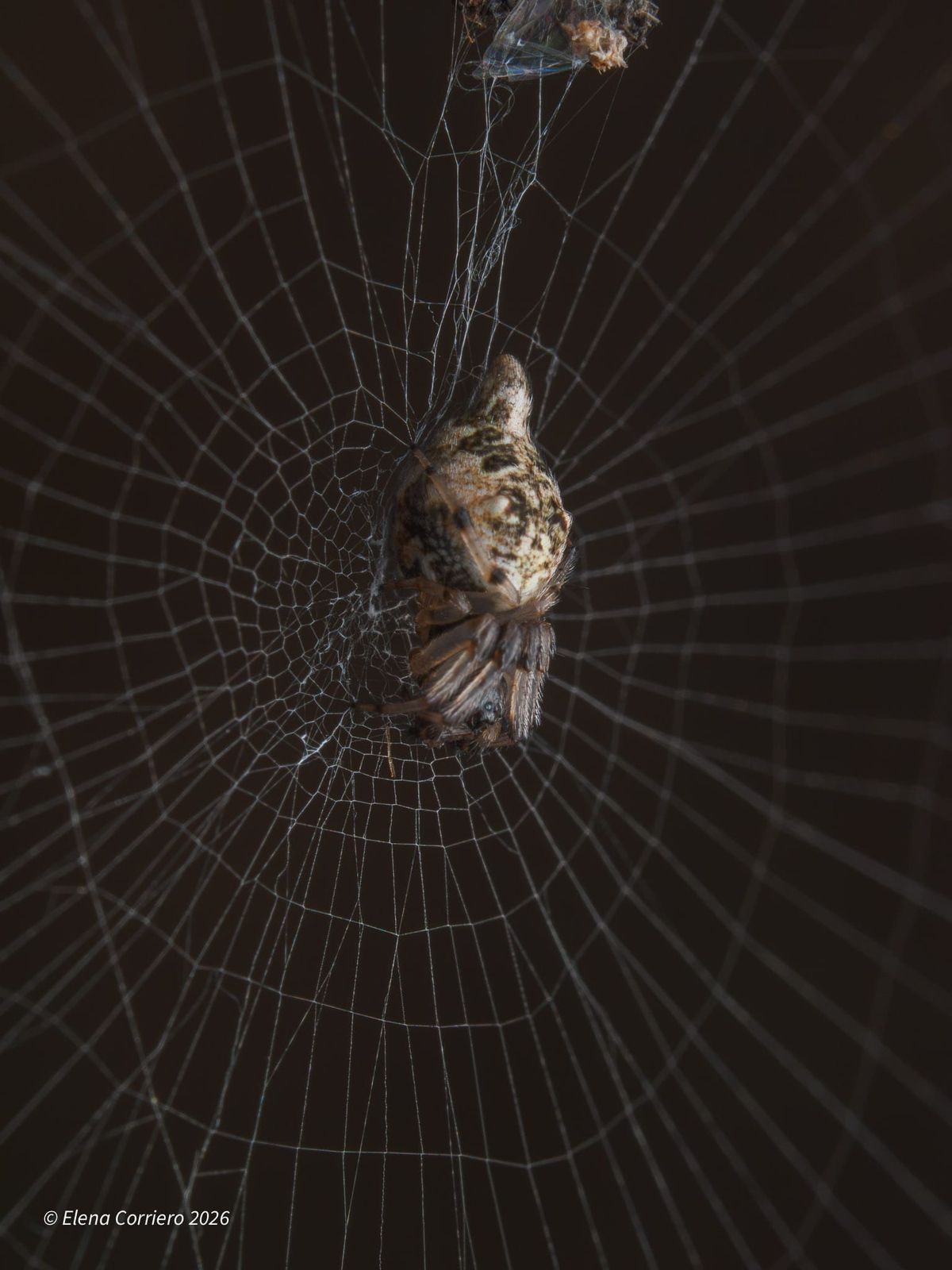
I noticed her on my midday walk around the neighborhood. Her web was anchored neatly around the thin stump of a branch here, a twig there. Three main lines on which the spokes of the small orb were built, at waist height.
I didn’t have the camera, so I promised her I would visit again after work, hoping that the owners of the car parked right next to it would not rip her artwork apart.
When I went back, later in the afternoon, I was disappointed.
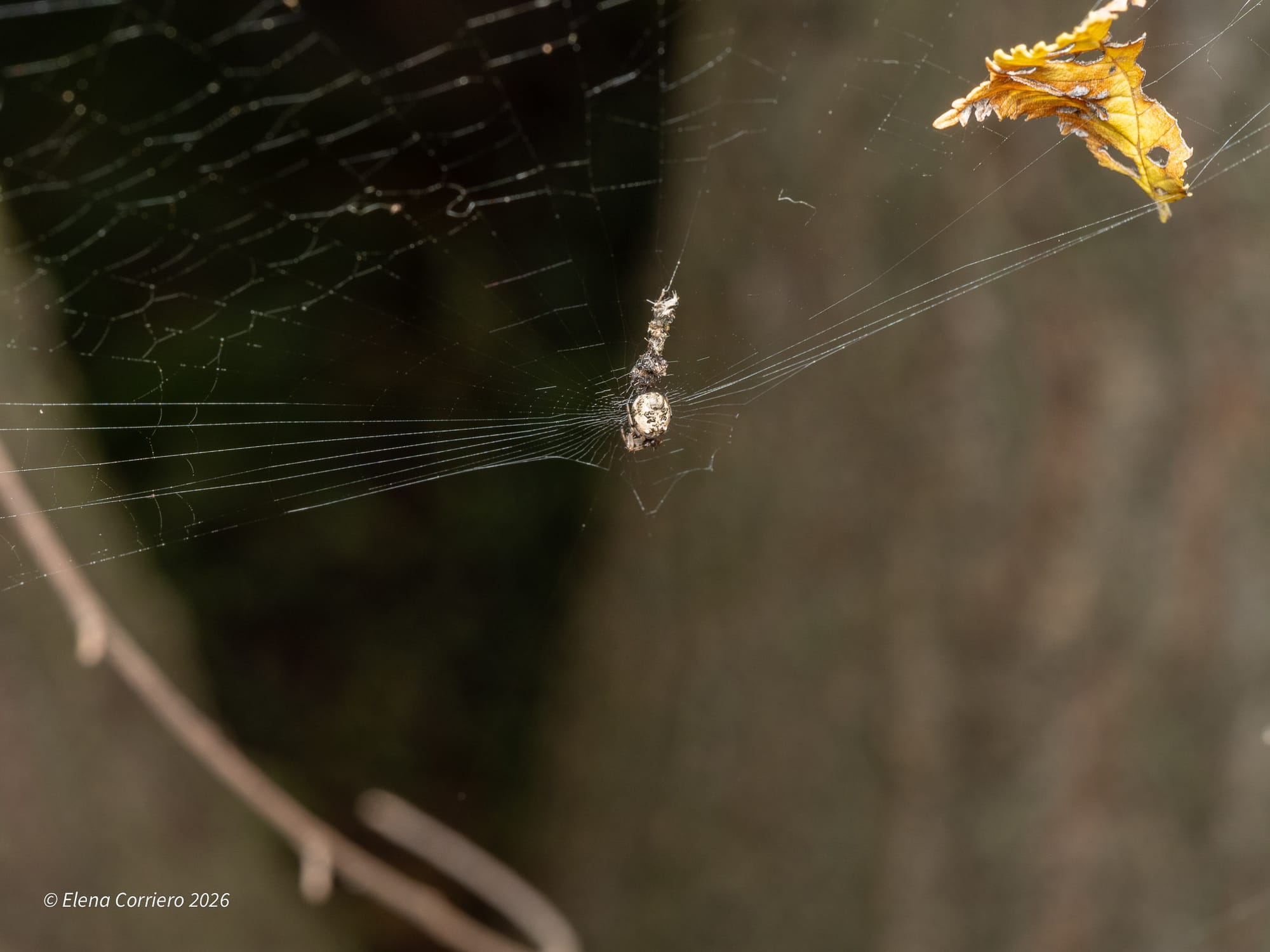
I could see something in the web: a dried out husk, a bird dropping, maybe, but not the spider. Weird, though - I thought to myself. She would not leave a dried out husk in the dead center of her web. That’s a privileged observatory for many orb weavers.
But… that white dropping in the center of the web… could it be… her?
Only after I shot a first picture and looked at it was I able to see the spider. Had I not had a camera, I would have gone home, convinced that my date had left me high and dry.
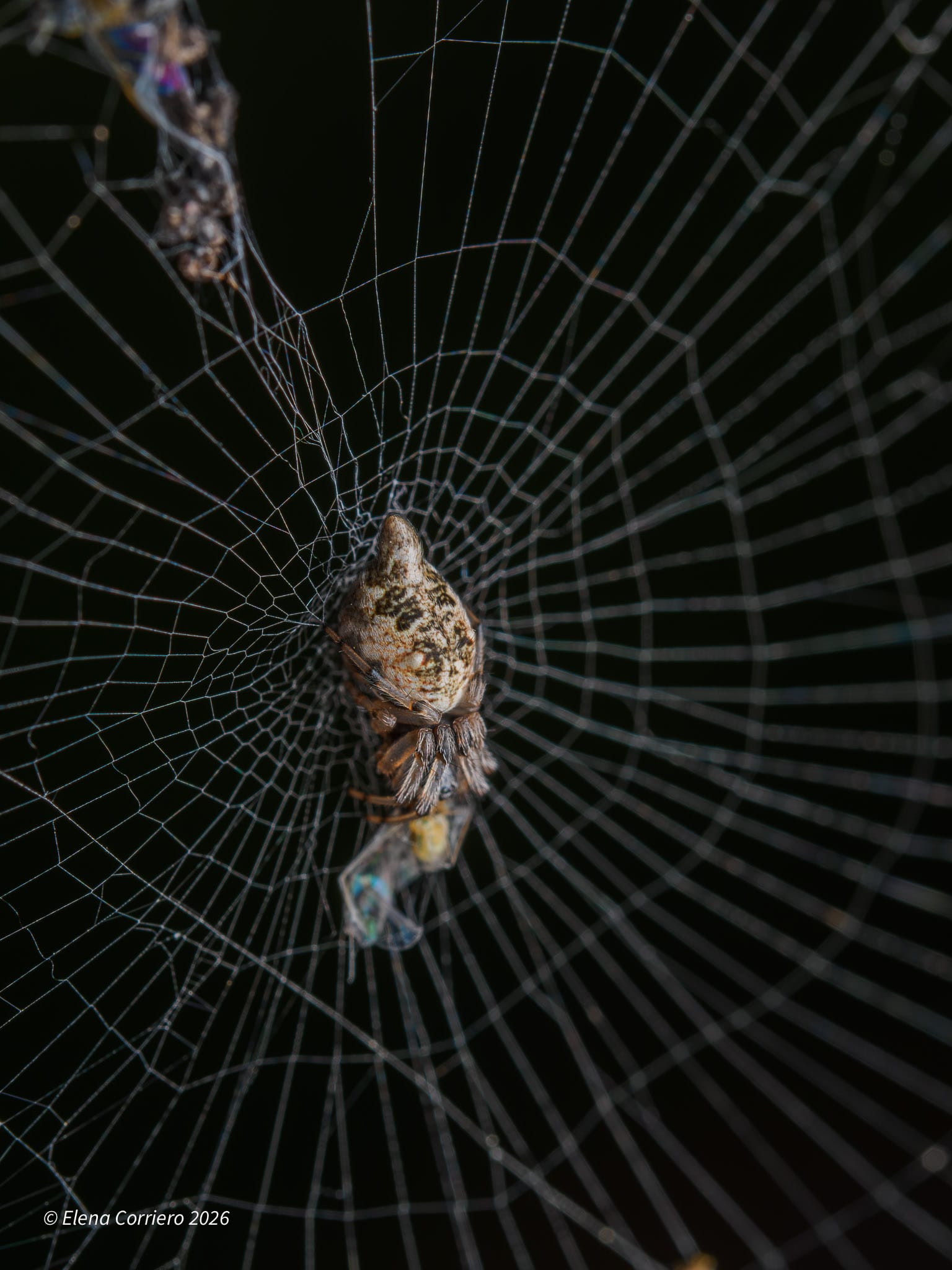
The Cyclosa was still enjoying her repast, but the position she held was new to me. Her hind legs flush against her abdomen, her fore legs covering her cephalothorax.
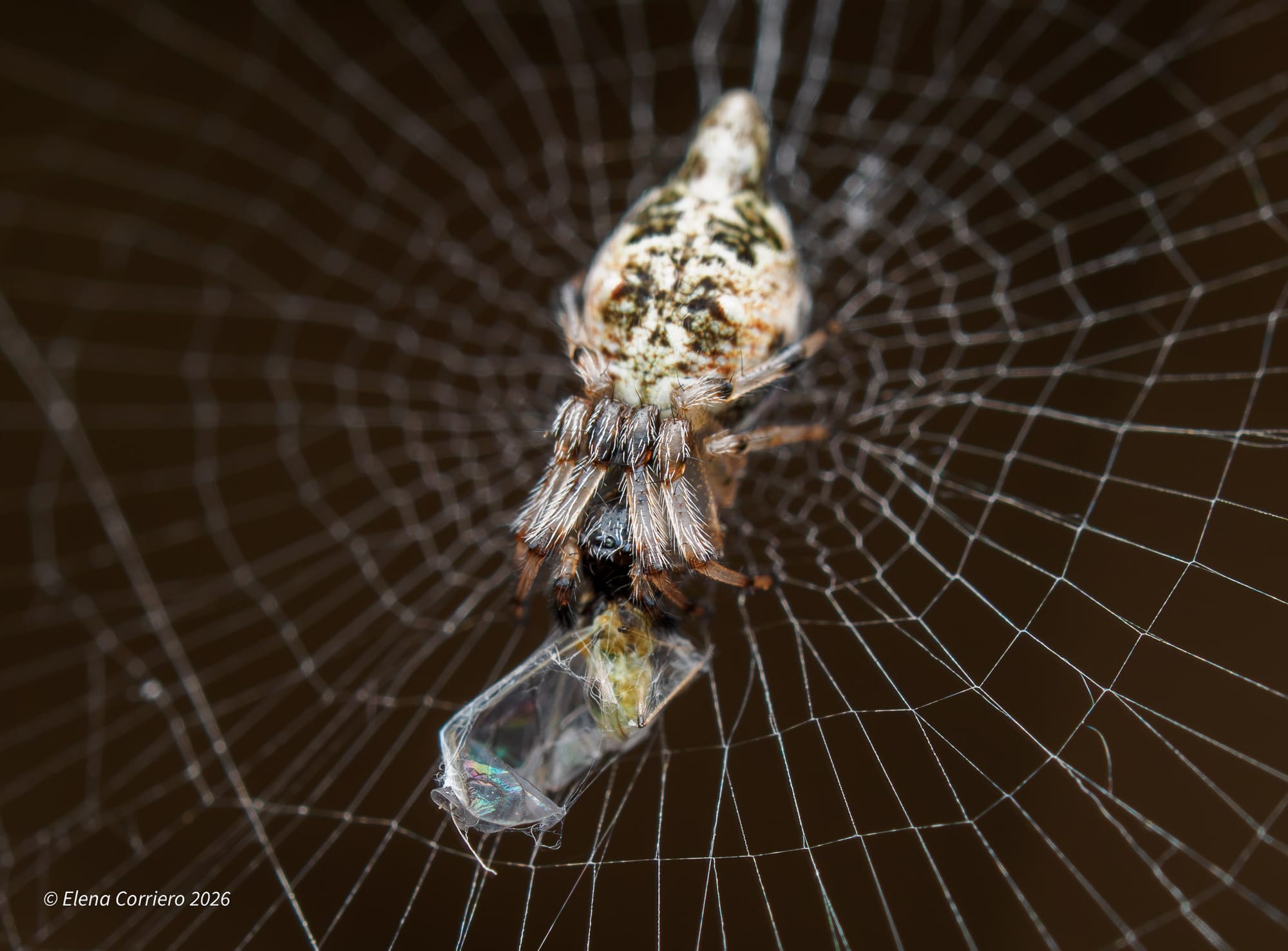
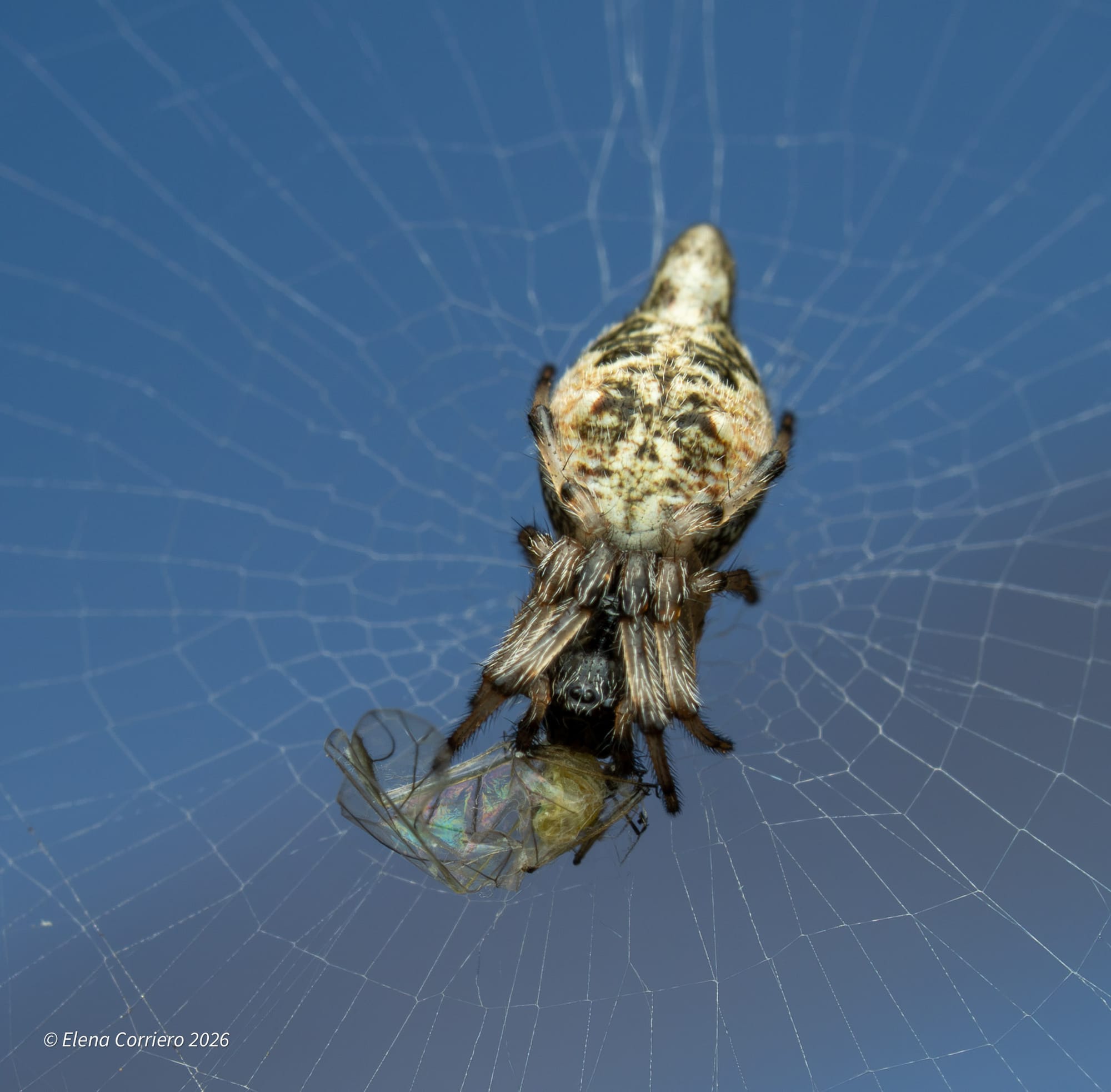
Her position made me question if she truly was an orb weaver. The ones I had seen so far were much bolder and intimidating.
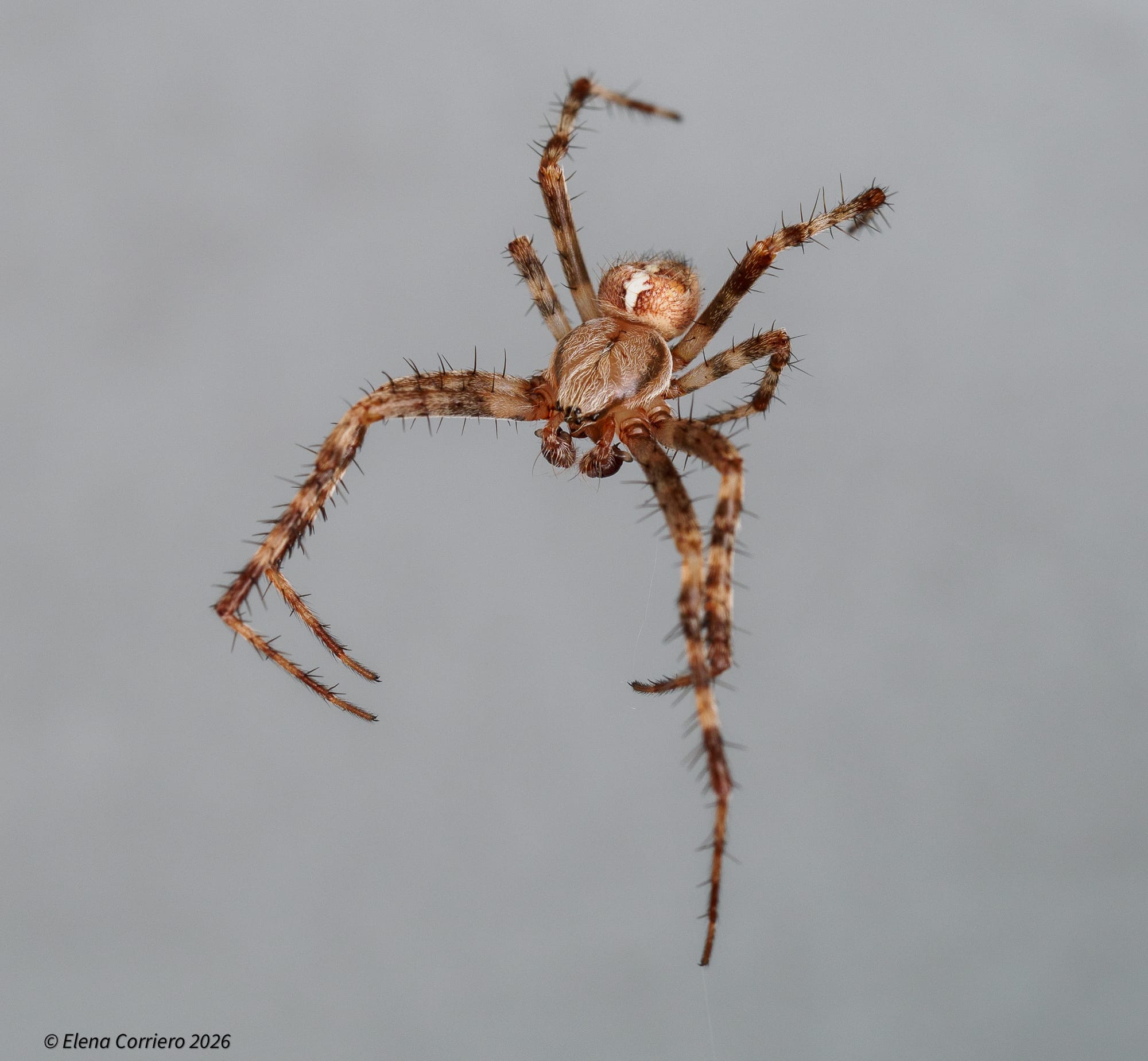
I didn’t take her deceit personally, however. I’m sure I wasn’t the one she was trying to deceive with her “trashline” camouflage. The litter - debris and dried out husks of her prey - is artfully disposed along the midline of the web, so that the Humped Trashline Orbweaver can sit in the center and listen for prey or mates, without attracting much attention on herself (or on her eggs).
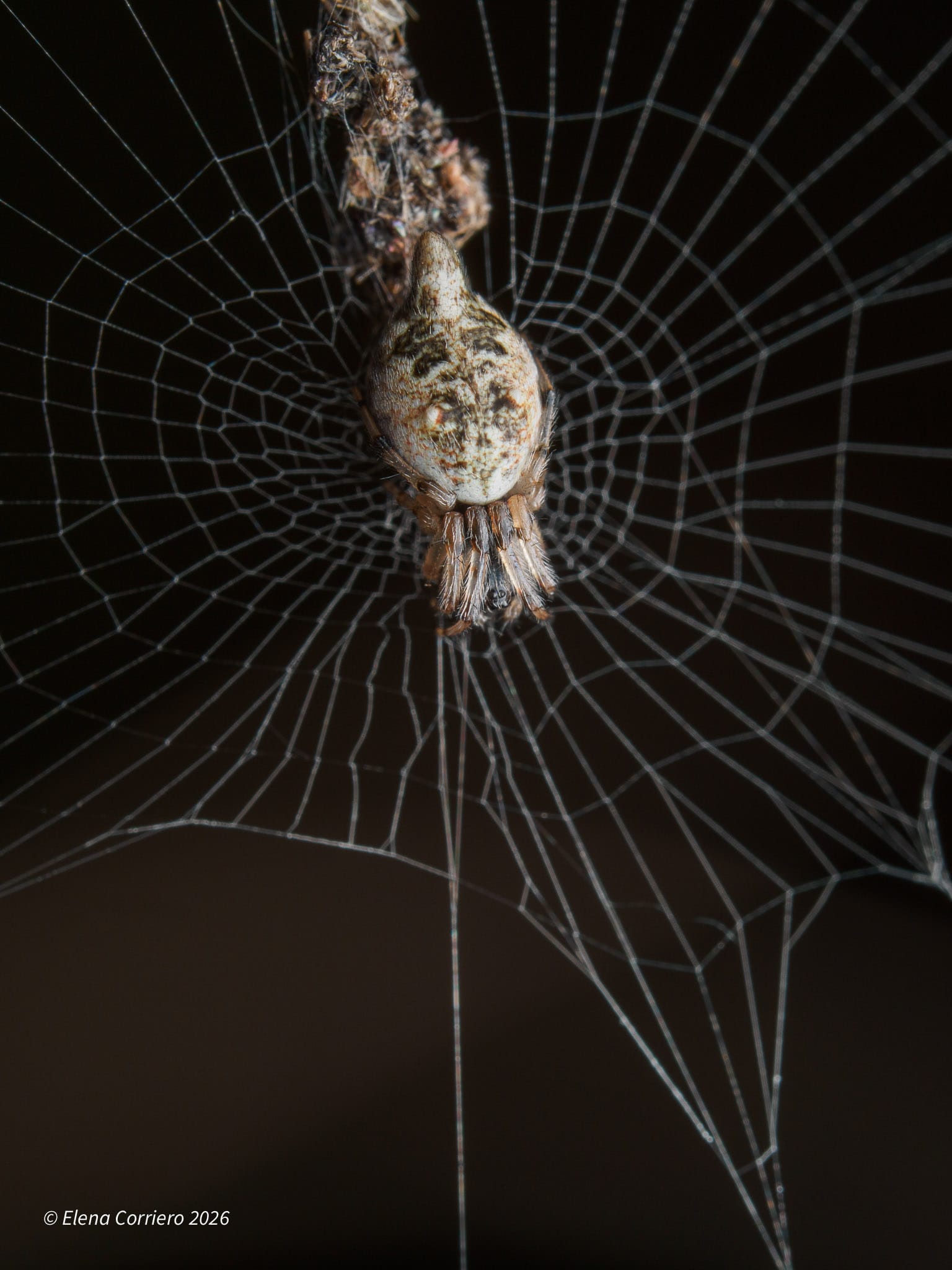
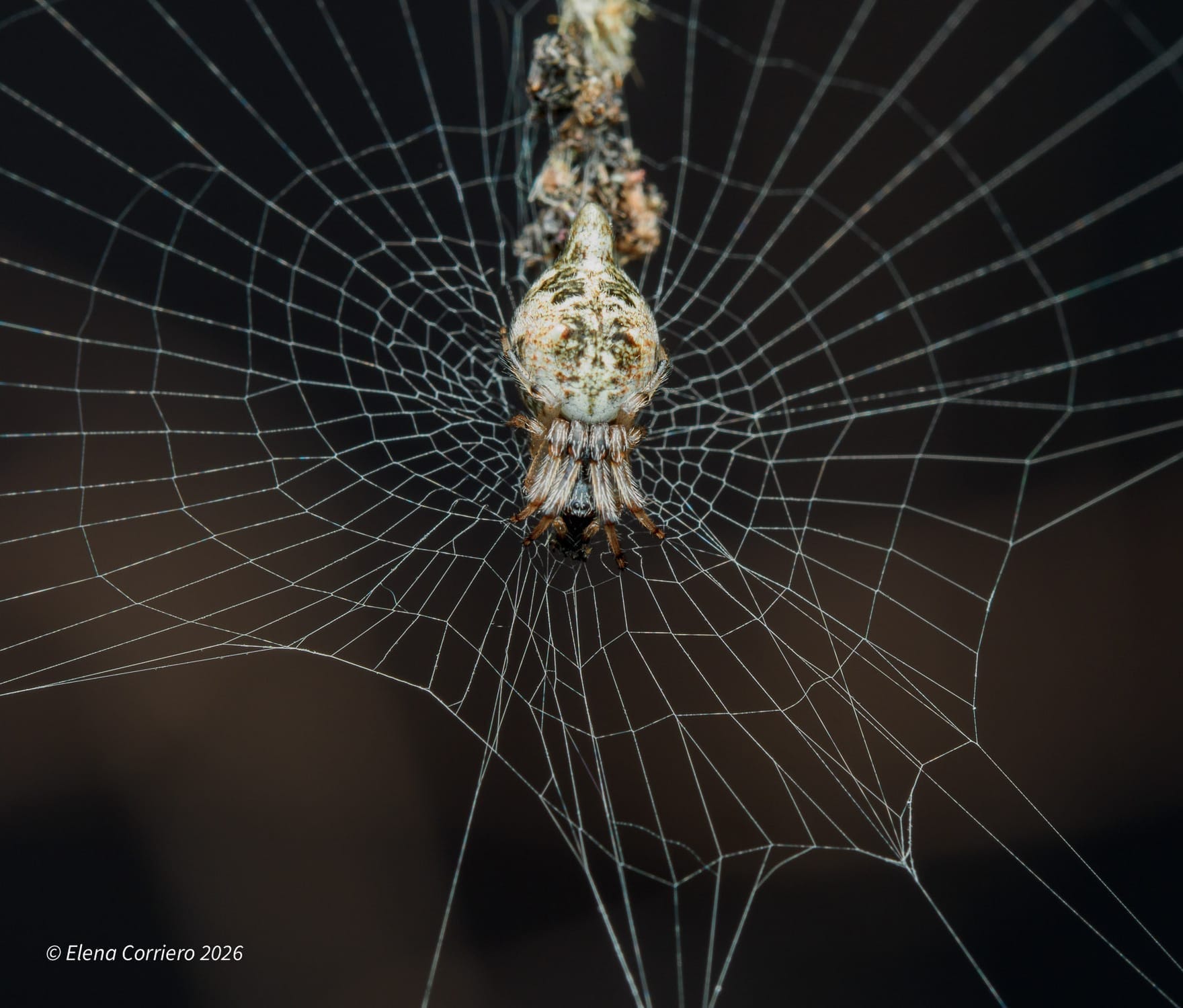
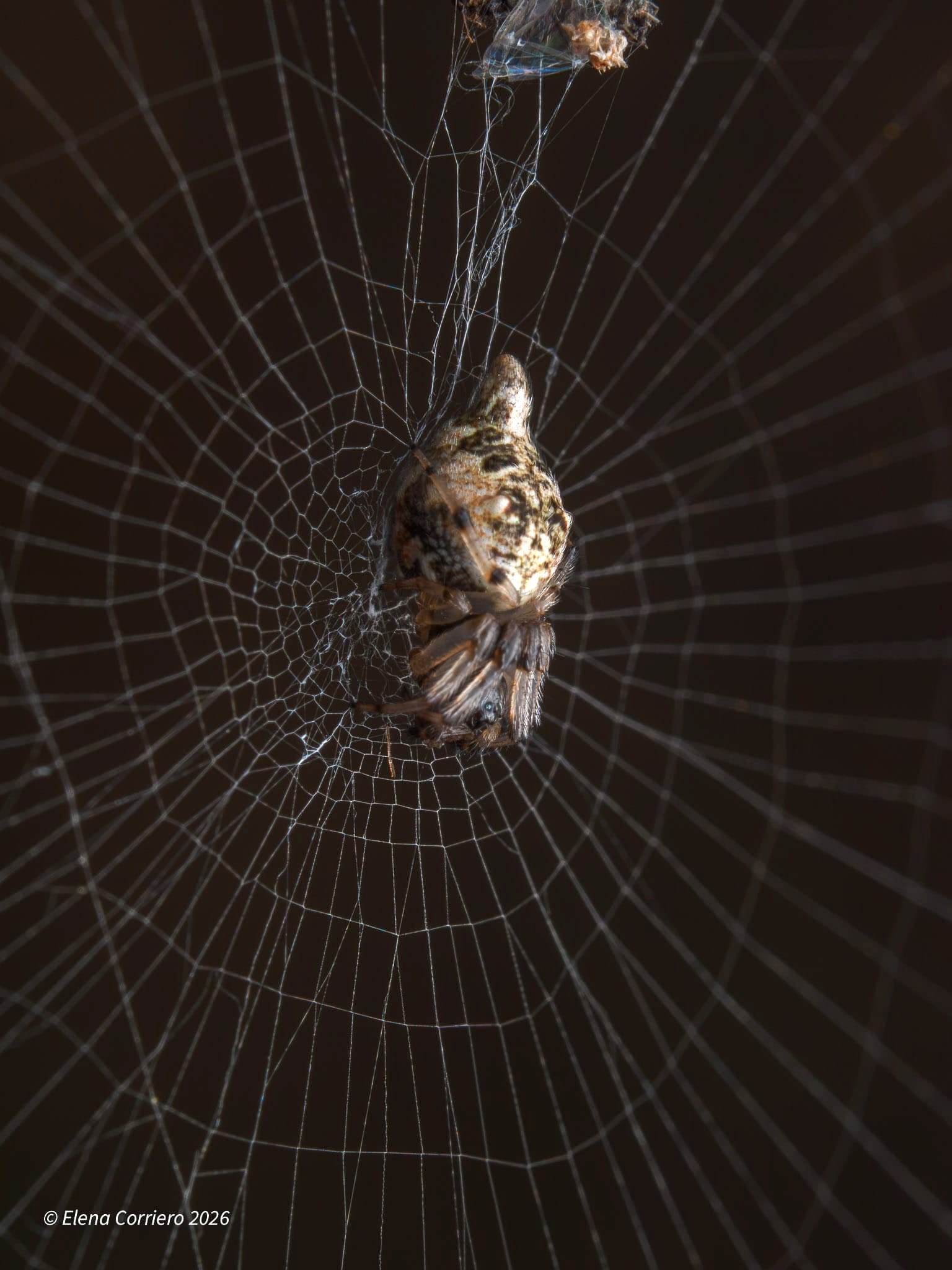
The Cyclosa makes herself inconspicuous while still occupying her privileged observatory in the center of her orb.
A camouflage strategy would have been helpful for me, too. I was technically on someone’s property. I’d say two steps off the sidewalk and into their driveway, for about 30 minutes… and I went back 2 other times. Fortunately no one came out to complain, although a young man walking his dogs stopped to ask me what I was doing. I'm glad he wanted to see the photos; I would have probably shown him anyway.
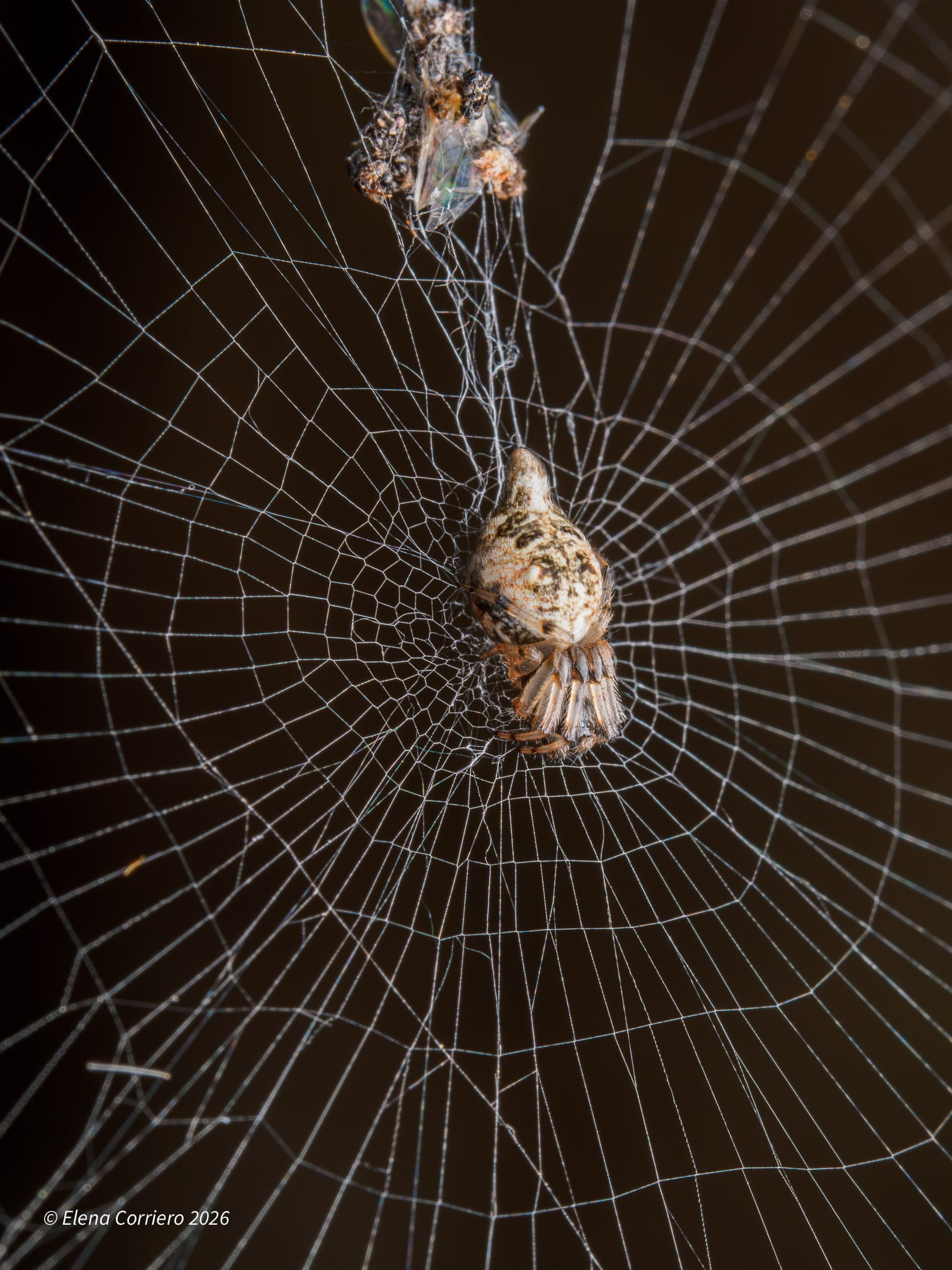
The Cyclosa will likely die off with the first colds, but the spiderlings will emerge from their cocoon in the spring, and ride the warm air to where the winds take them*.
Elena Corriero
All photos shot handheld
OM 60mm, f/11 1/250, ISO 200 + Godox V350 & AK diffuser
Comments ()