The (Asiatic) spider’s on the wall
Have there always been all these jumping spiders around, and did I really never notice them?
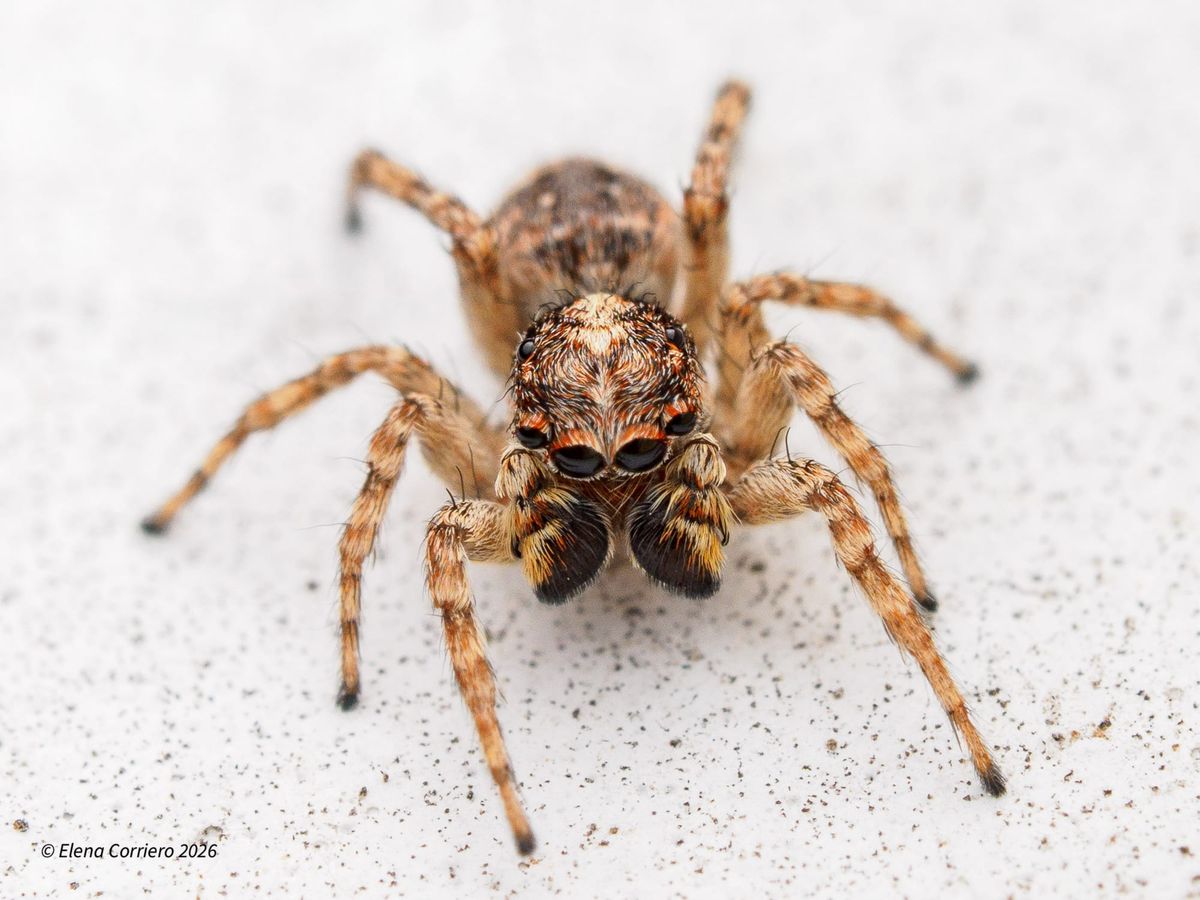
The Attulus Fasciger is the smallest of the jumping spiders that patrol the perimeter of my house.
True to its colloquial name - Asiatic Wall Jumping Spider - the Attulus Fasciger is typically found on man-made walls, but not only in Asia anymore.
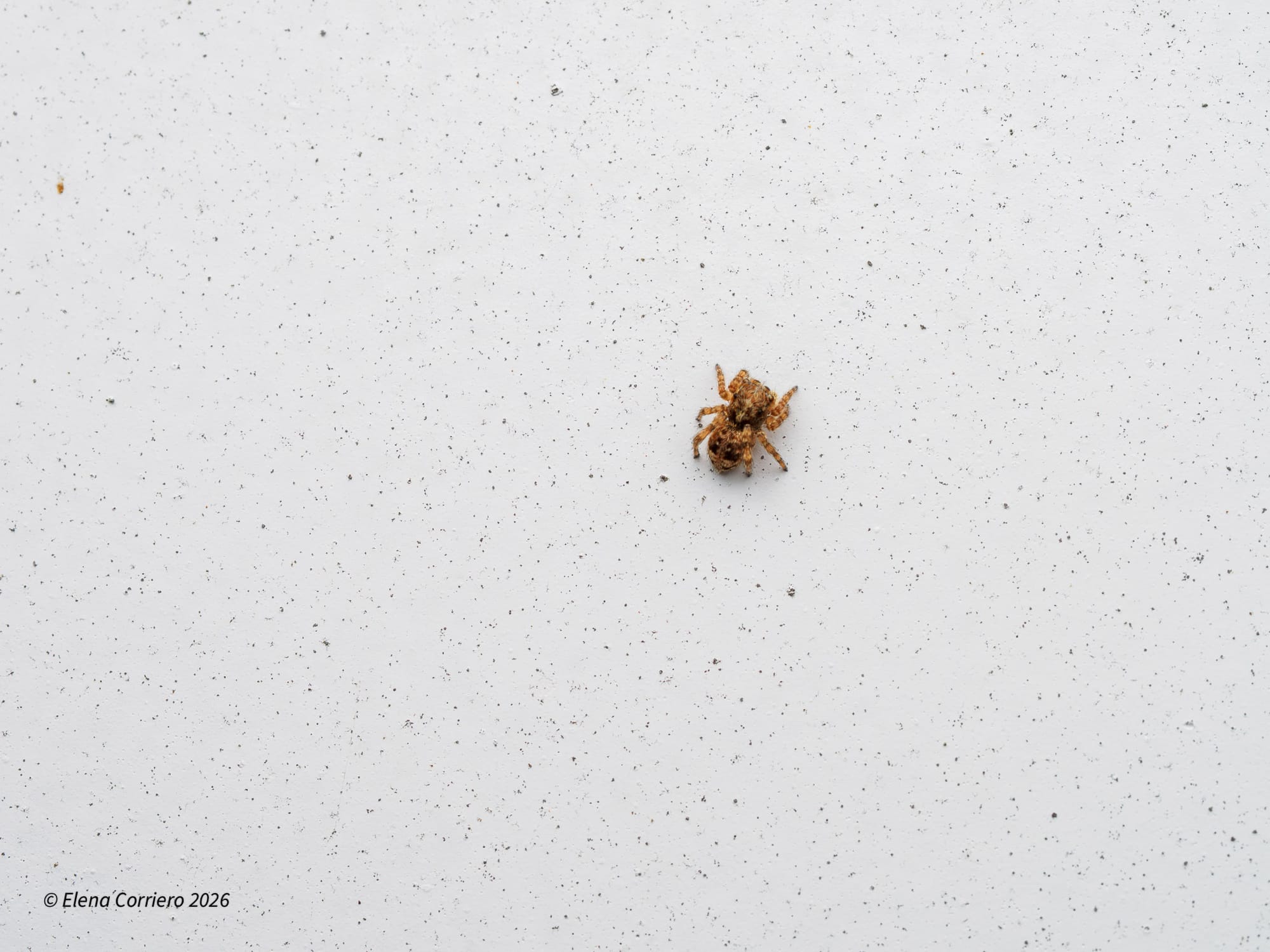
At barely 3.6-4.5 mm, and with a tan and cream coat, the Fasciger is much more inconspicuous than the Audax (or Bold Jumping Spider). However, now that my eyes are trained, and I know what I am looking for, I see them. I see them everywhere... and sometimes where they're not. I must confess that, in my spider-zeal, I sometimes find myself photographing tiny pieces of dirt, or some sort of dead matter: clearly not a spider.
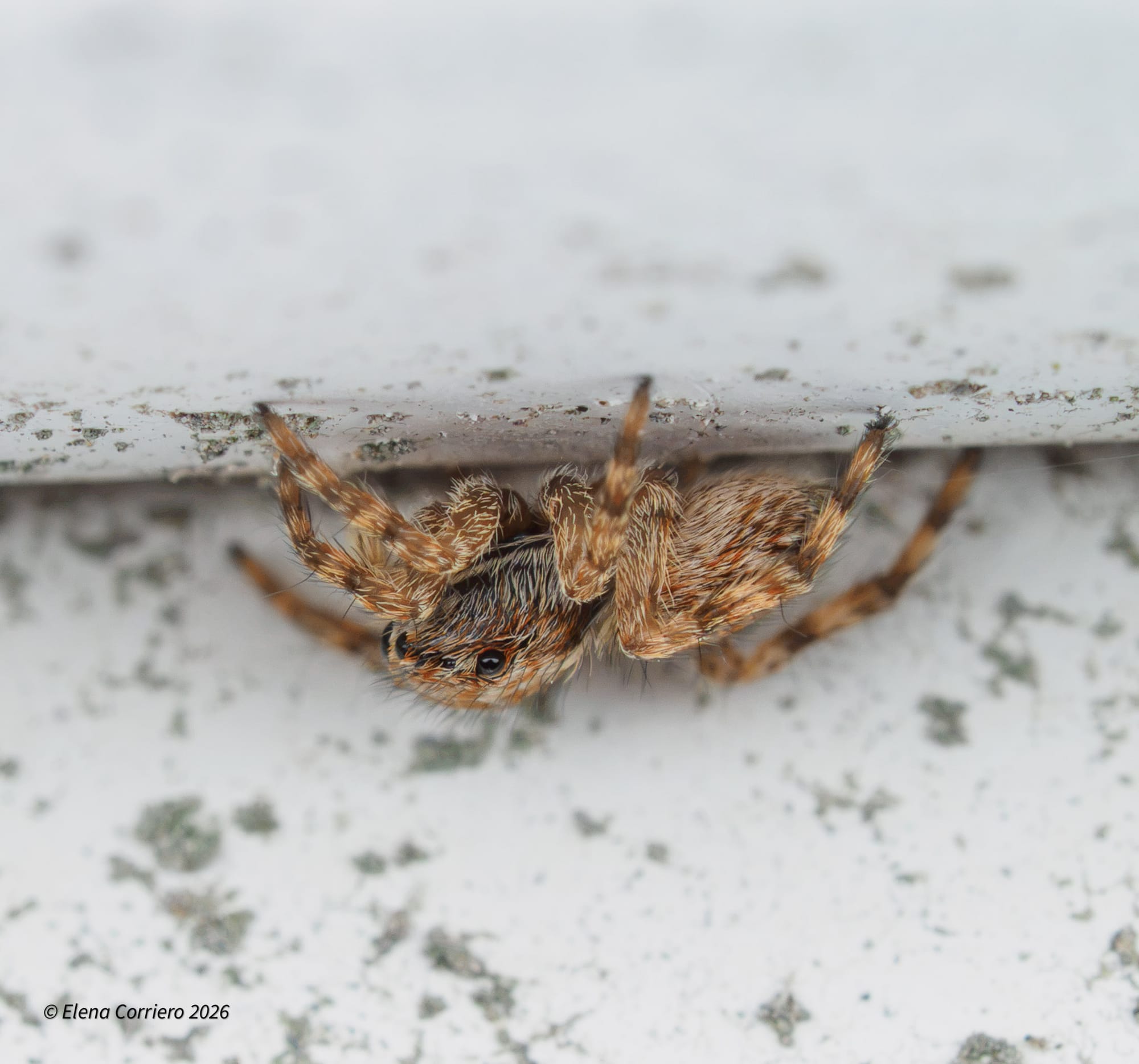
But blunders aside... Have there always been all these jumping spiders around, and did I really never notice them? Or have all the eight-legged dwellers of my “estate” moved in during the last year, attracted by the wildflower party and the abundant prey ?
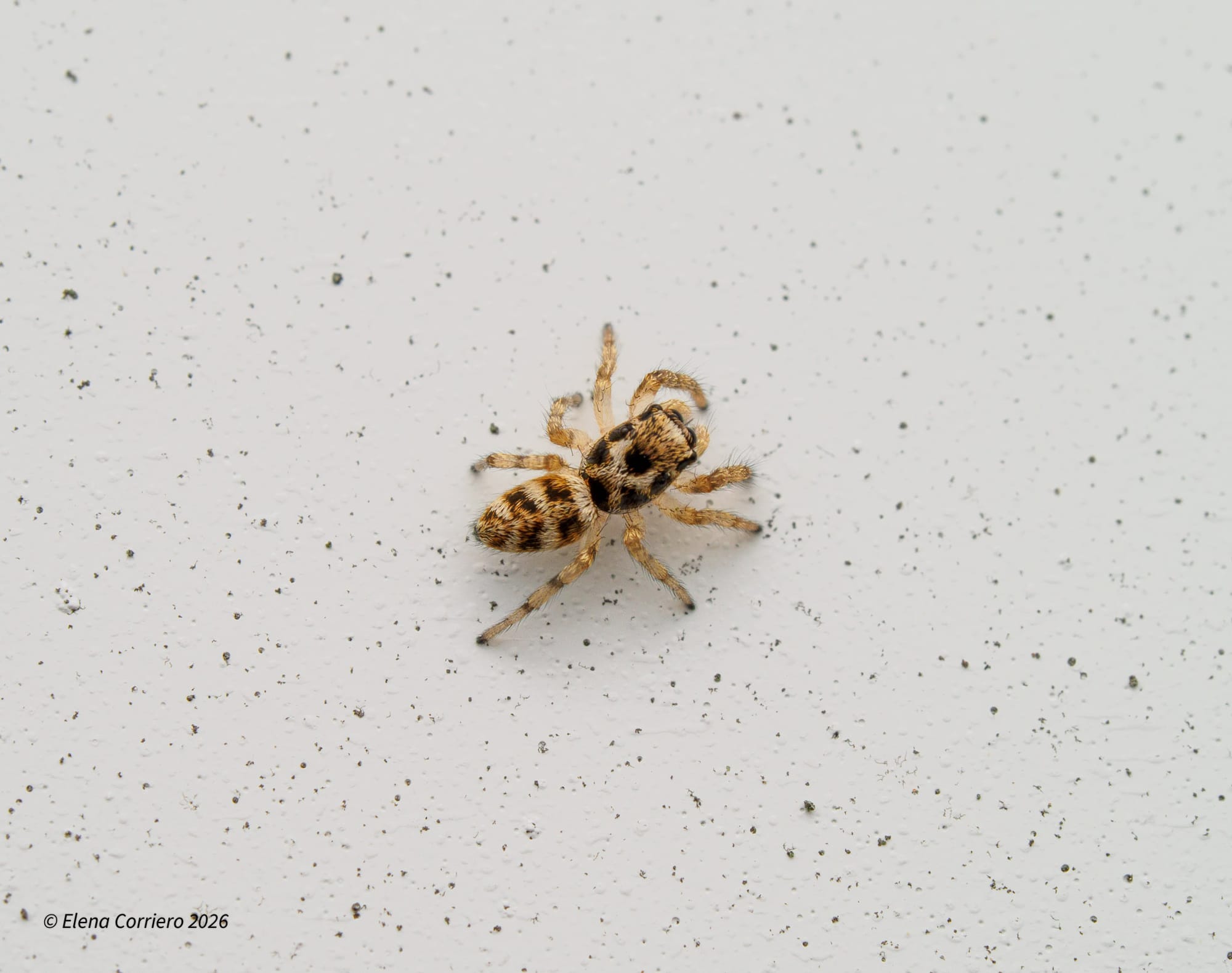
From what I can tell, there are at least three different "types" (more accurately, genera) of jumpers around. First and foremost, our Bold Jumpers (Phidippus Audax) - like Meg, Jinny, Miss Halloween. Second in order of frequency, the tiny Attulus Fasciger. More rarely, I’ve encountered a couple of Zebras (Salticus Scenicus). Jumping Zebra sounds really cool as a shorthand, but it could definitely cause some misunderstandings.
Given their density, they must cross paths. It seems inevitable. When they do... Do they know that they are related? Do they ignore each other, or eat each other?
This is a question I asked to researcher and spider expert Dr. Damian Elias, from UC Berkley. (By the way, our full length chat will be out soon!!!)
First of all, he confirmed that spider density is indeed high, and that it is common to find many different species of jumpers in the same area. In some parts of California, where he studies the jumping spider Habronattus, there are "nine species that are overlapping and just on top of each other."
Secondly, there are some communication signals that are shared and can be understood within the larger jumping spider family, so to speak.
Spiders do like eating each other all the time. But there is a lot of behavior probably involved in more of a conspecific context to stop the predatory behavior - or at least advertise the danger of it.
In other words, jumping spiders will advertise to other jumping spiders that they are a threat.
Let's say you're a Fasciger, going up and down on a wall, looking for food or for a mate. Suddenly, you notice another "thing" in your field of vision. That could be your next meal! But hold on, the "thing" has got big round eyes, and it's staring at you. If the "thing" also lifts its first pair of legs in the air, and waves them at you, (high) chances are it's one of your kind - and by definition not an easy meal. In fact, you may end up being its dinner.
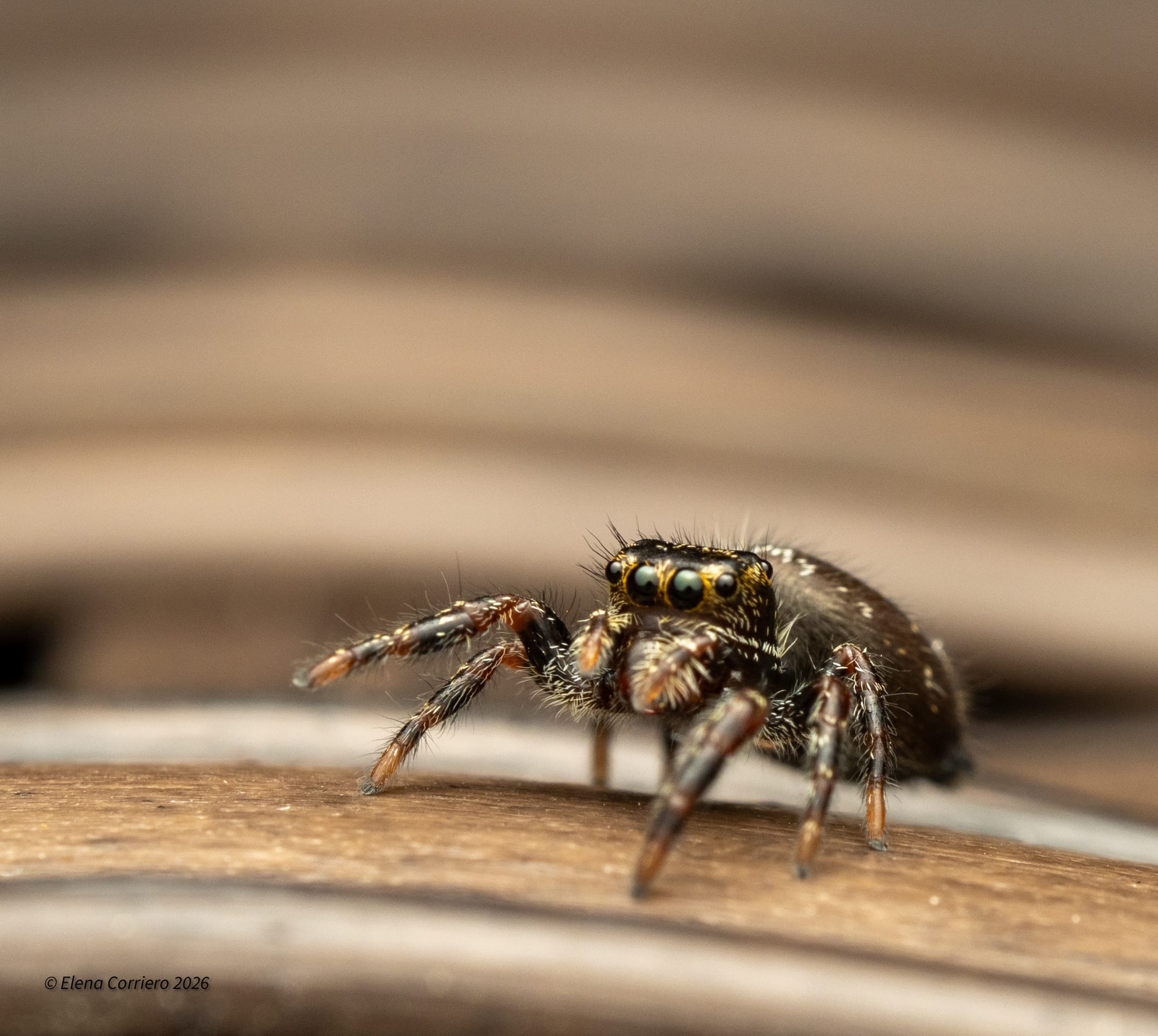
Interestingly, Dr. Elias explains that the “leg up” signal are also adopted by other non-spiders. Some flies, for example.
The way that the flies stops getting attacked by spiders is to have something that looks like those 'leg up' displays of jumping spiders - and they just move like them. That stops spiders from hunting them - or other things from hunting them.
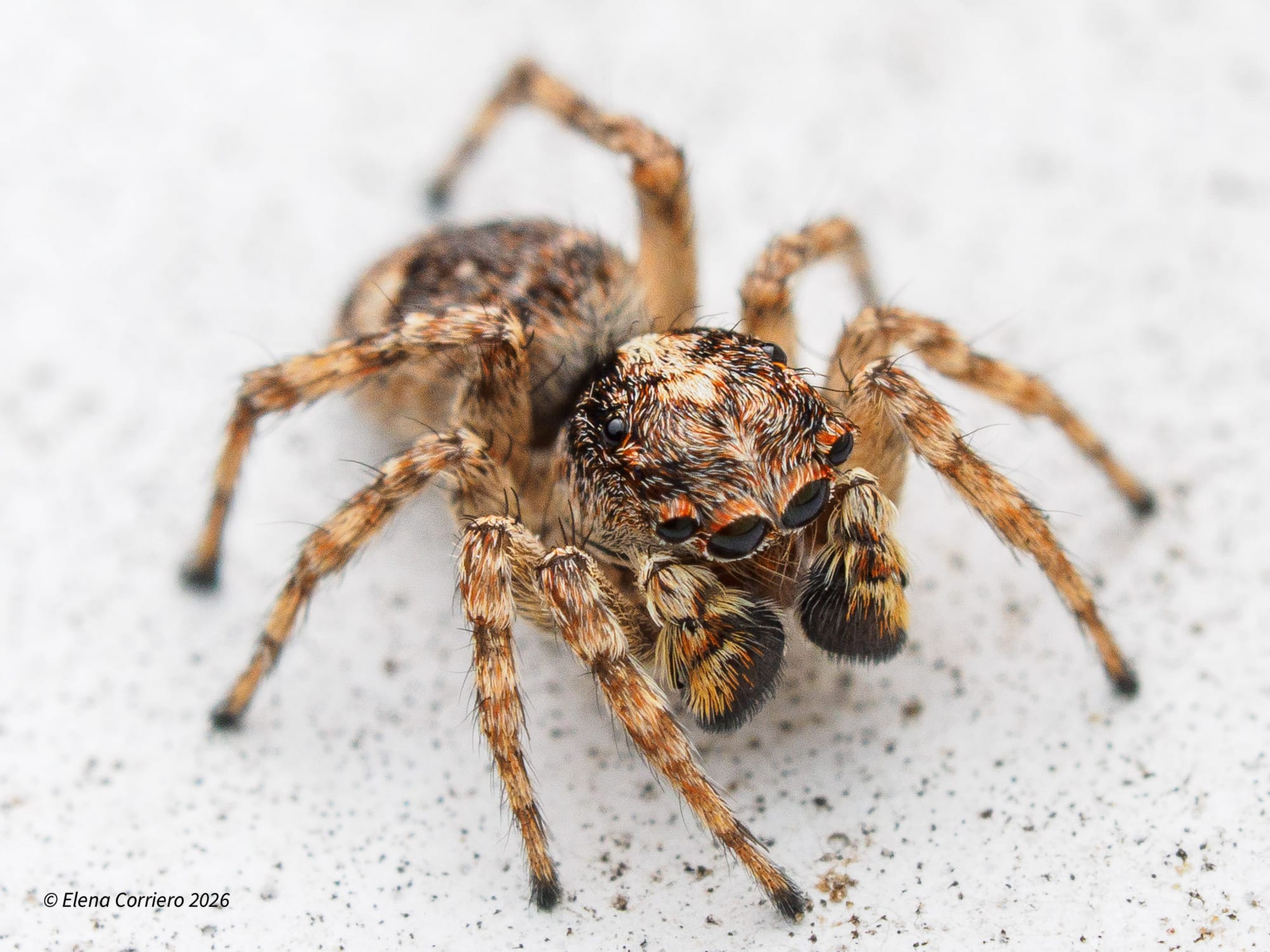
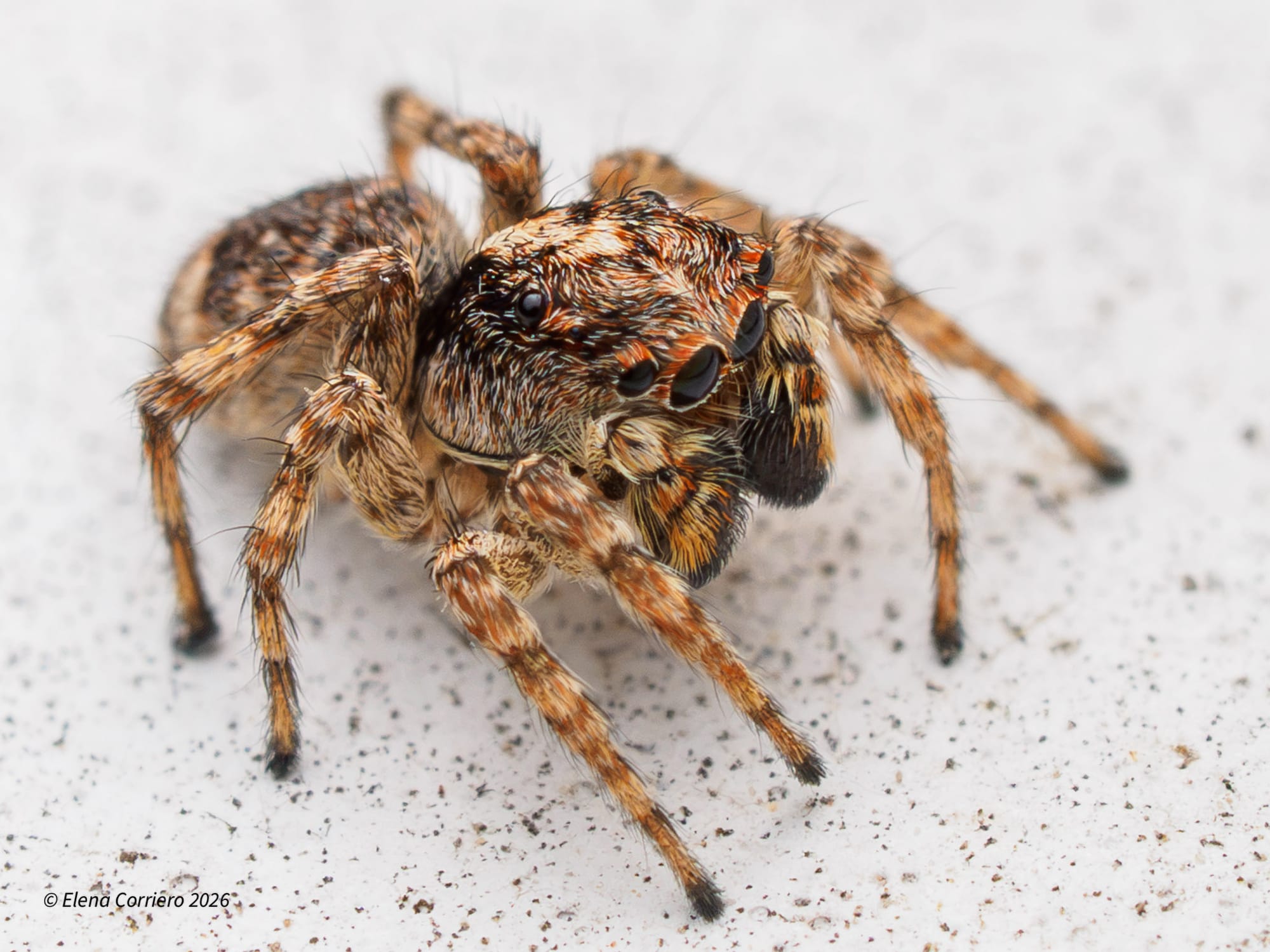
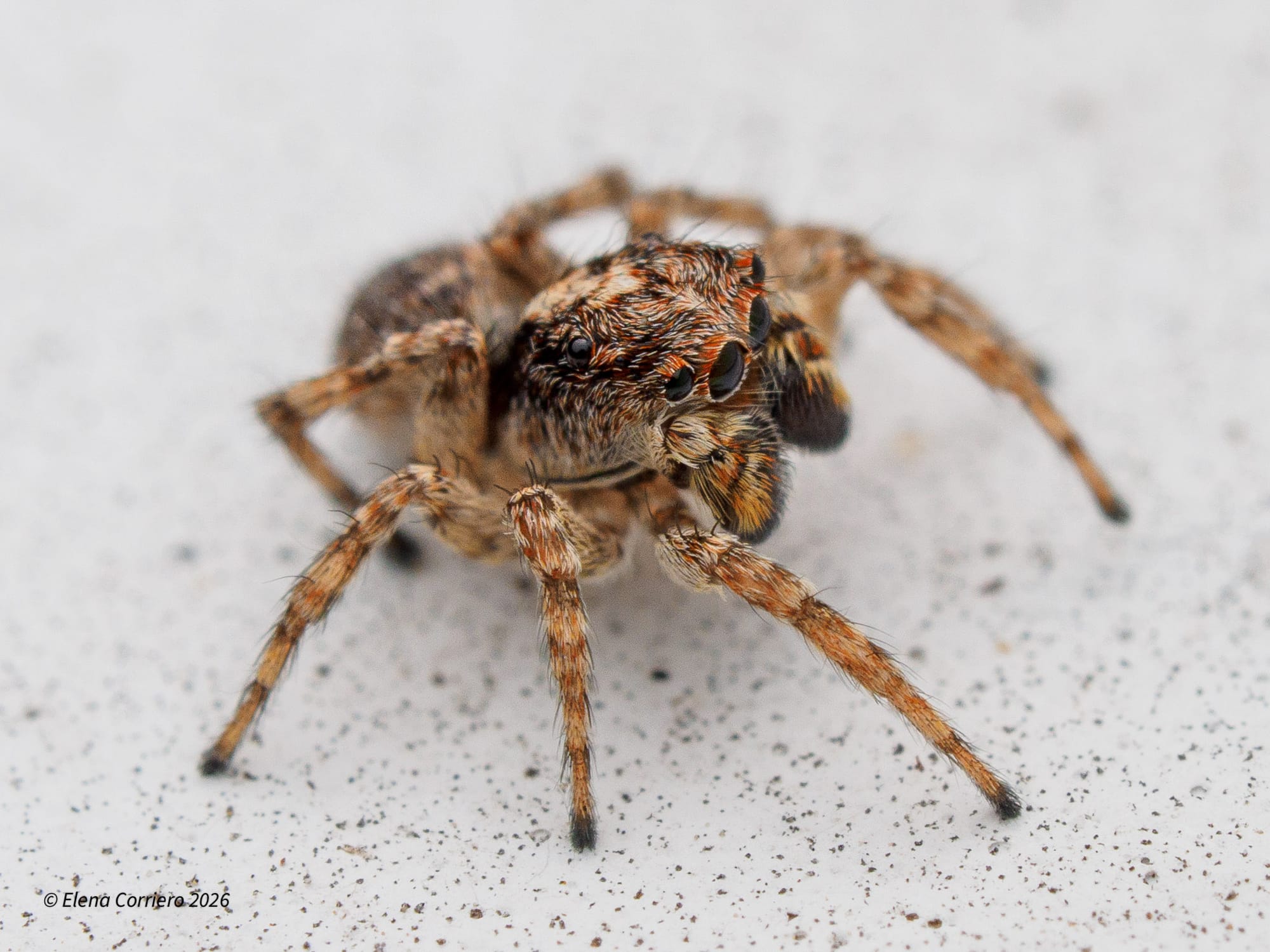
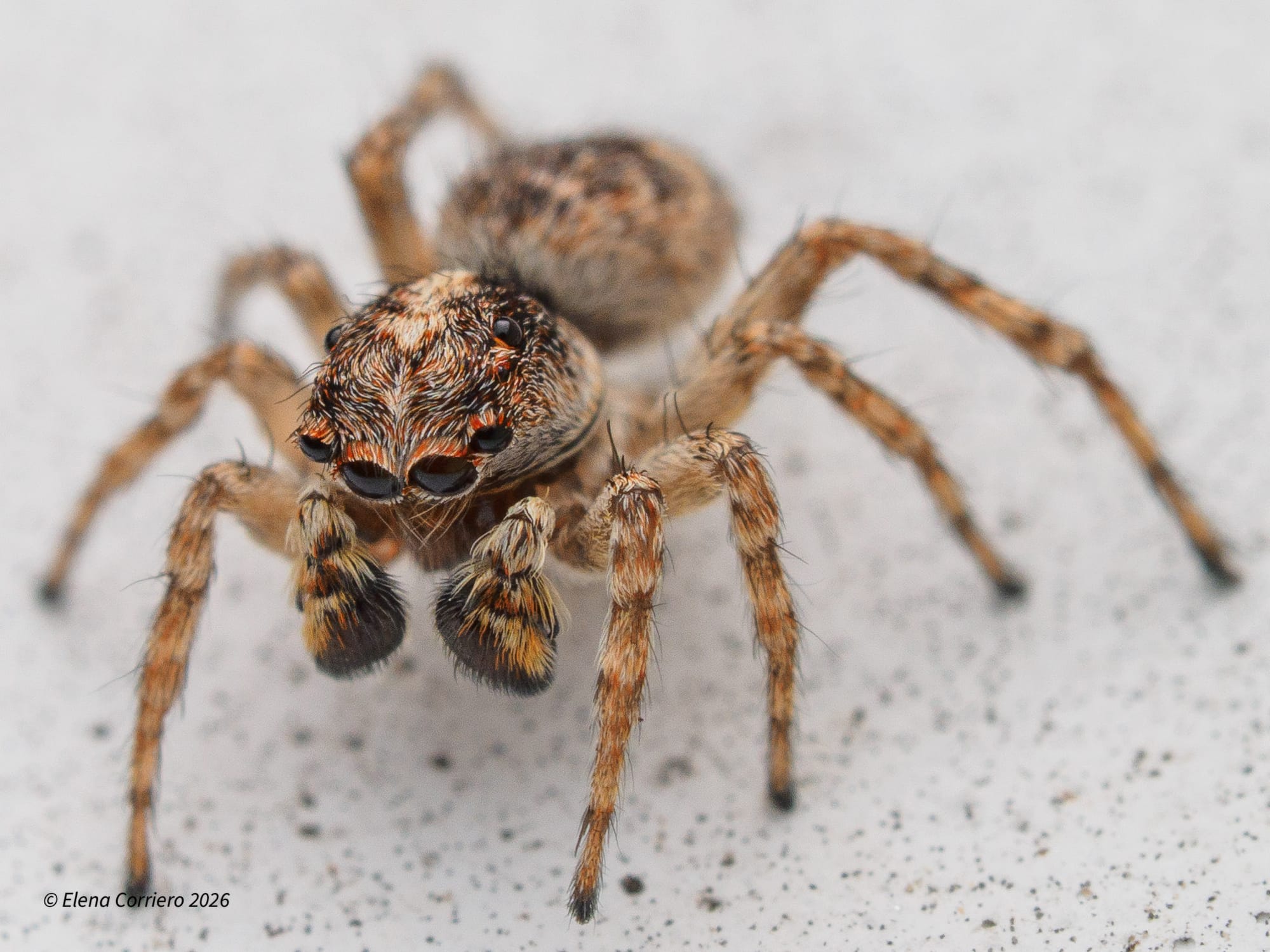
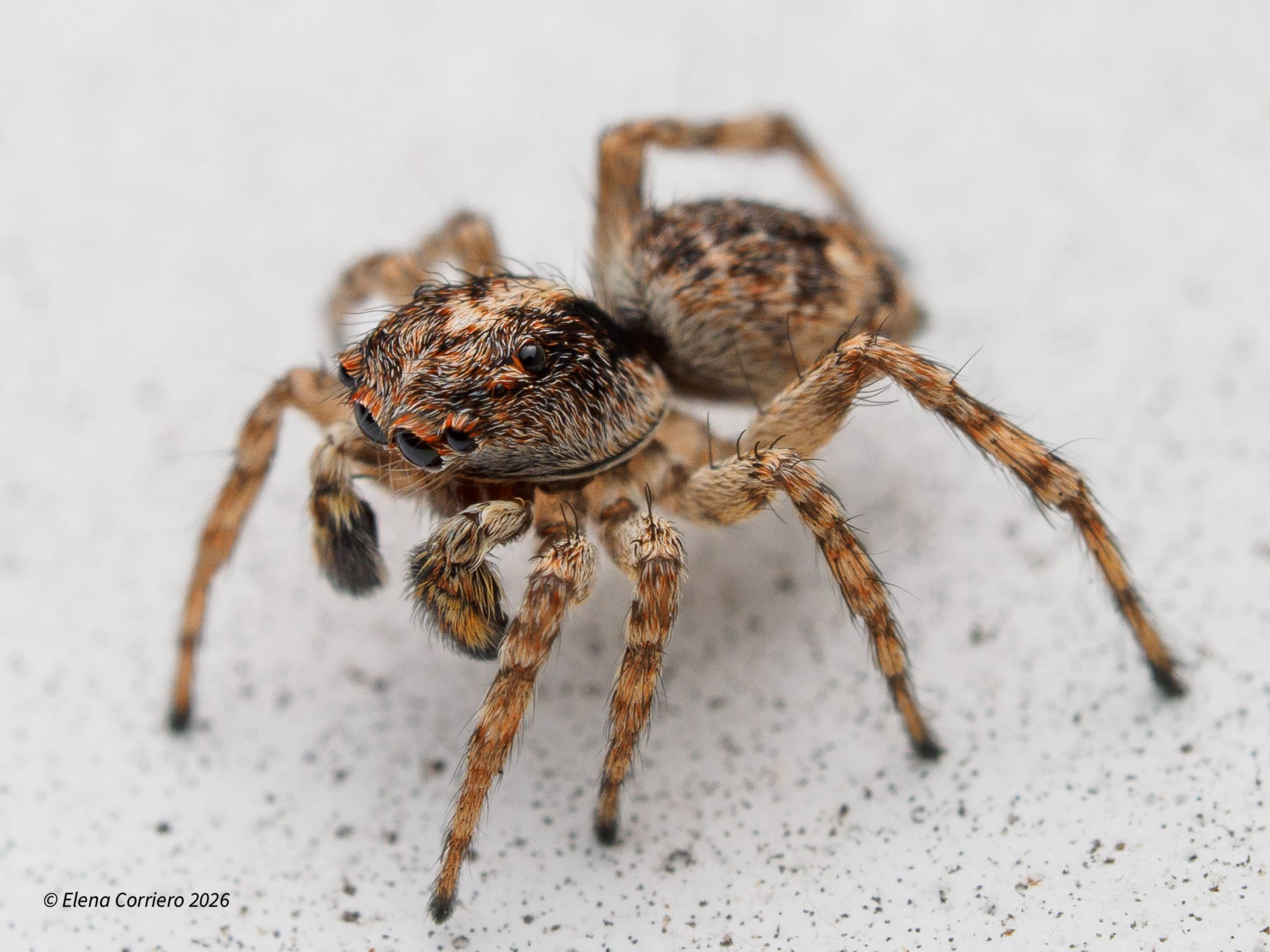
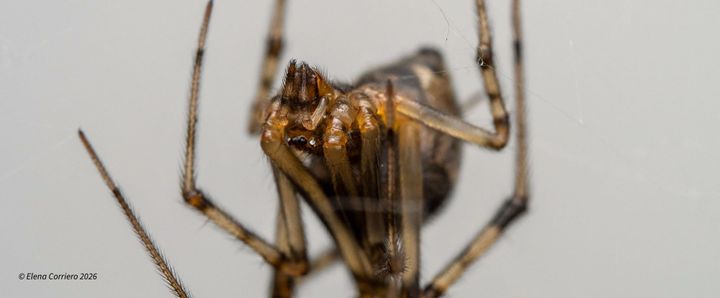
Attulus "Roger". You can tell he's a male due to his larger pedipalps. The backdrop is what it is.
So if you're that tiny Fasciger, you're warned. Whether or not you decide to approach will depend on a variety of other factors. How hungry you are, how big is the other jumping spider, what's at stake. Based on size difference alone, it stands to reason that the Fasciger would give the larger Audax plenty of berth.
Towards me, the "Wall Jumpers" seem to lean towards avoidance rather than curiosity - I am much bigger than them! Whenever they had a choice, they would move away. Which is quite easy, considering that they can climb on walls - and I cannot. (By the way, all these close up views of my sidings have made me really self-conscious about the dirt accumulating on them. I will have to do something, at some point.)
But they are jumping spiders nonetheless, and they seem to remain daring hunters. Earlier this summer, I observed one of them - Roger, if I’m not mistaken - as he was trying to find an angle of attack against a much larger Grass Spider who was hiding in his funnel.
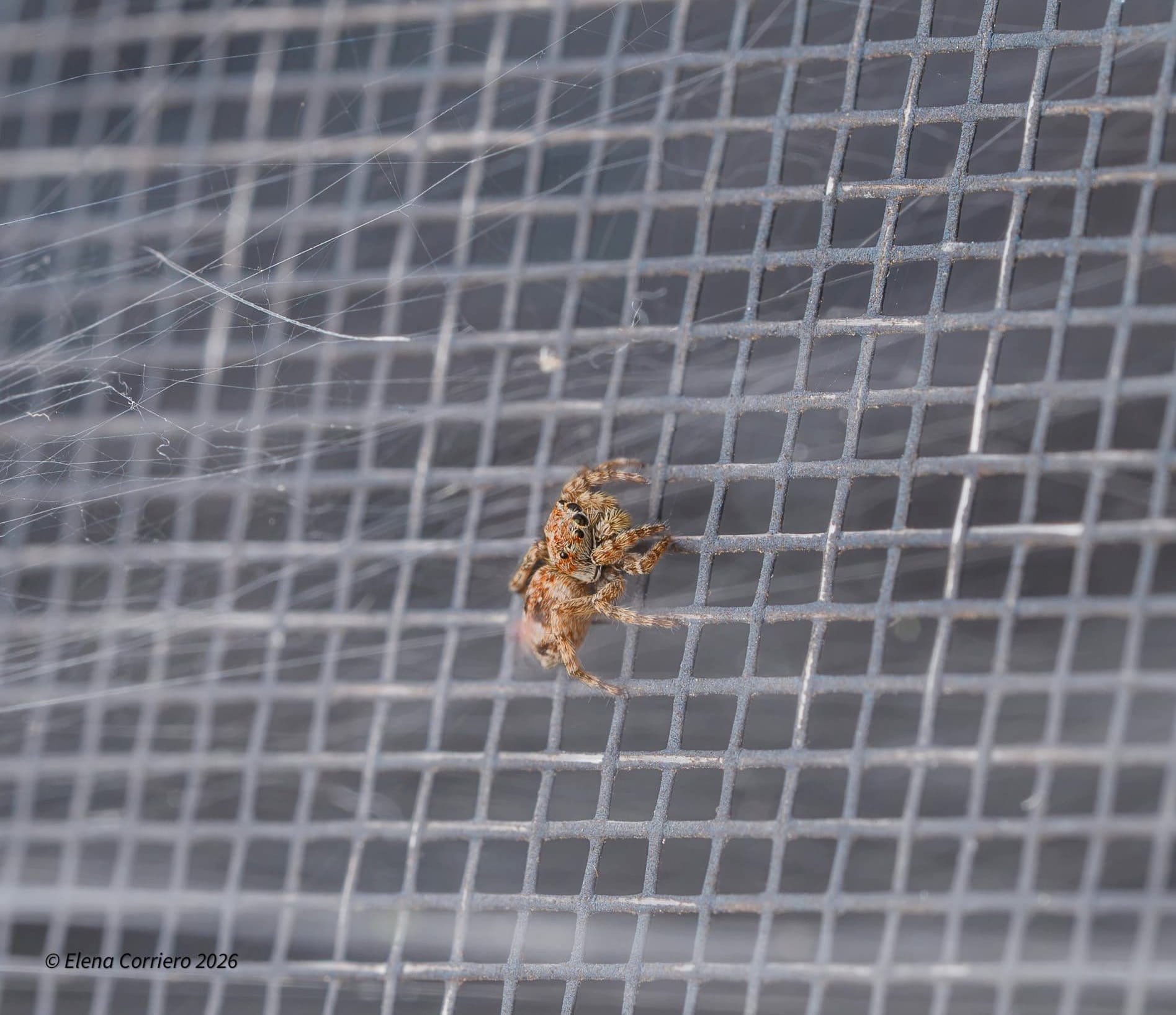
Maybe a little too daring, because in that particular instance I did have to intervene to save little Roger from certain death (more on this later).
I know I shouldn’t have, but don’t we all get lucky sometimes?
Elena Corriero
All photos shot handheld - OM 60mm, f8, 1/200, ISO200
Comments ()