Northern Crescent (maybe?)
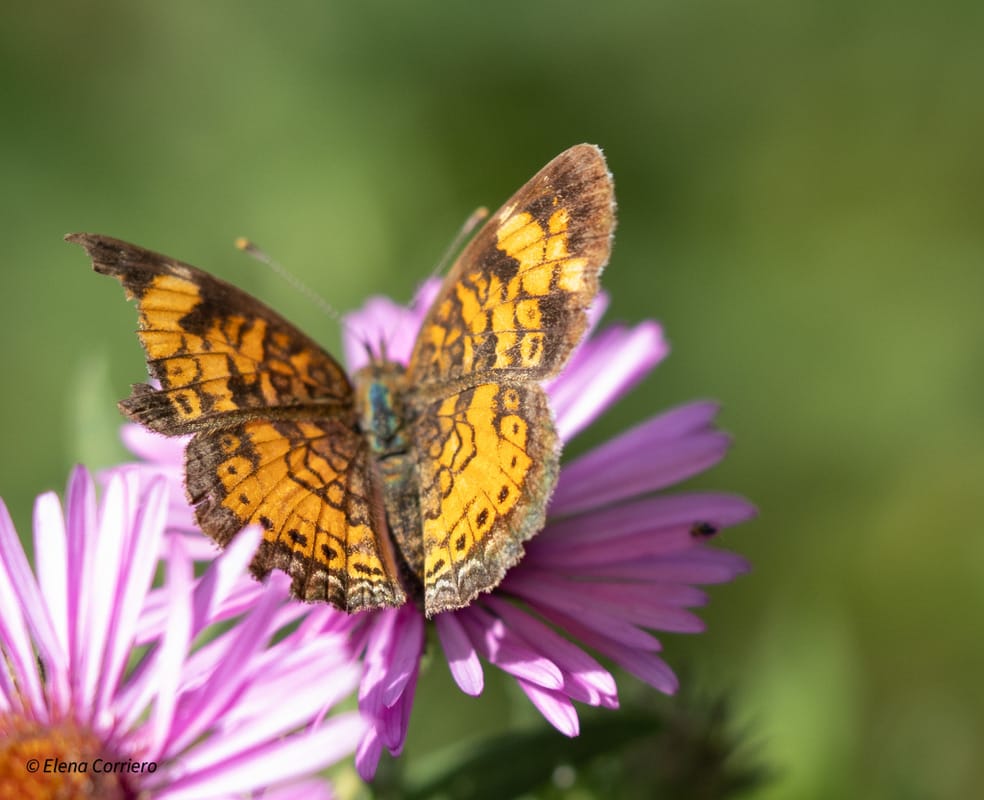
A butterfly with chipped wings.
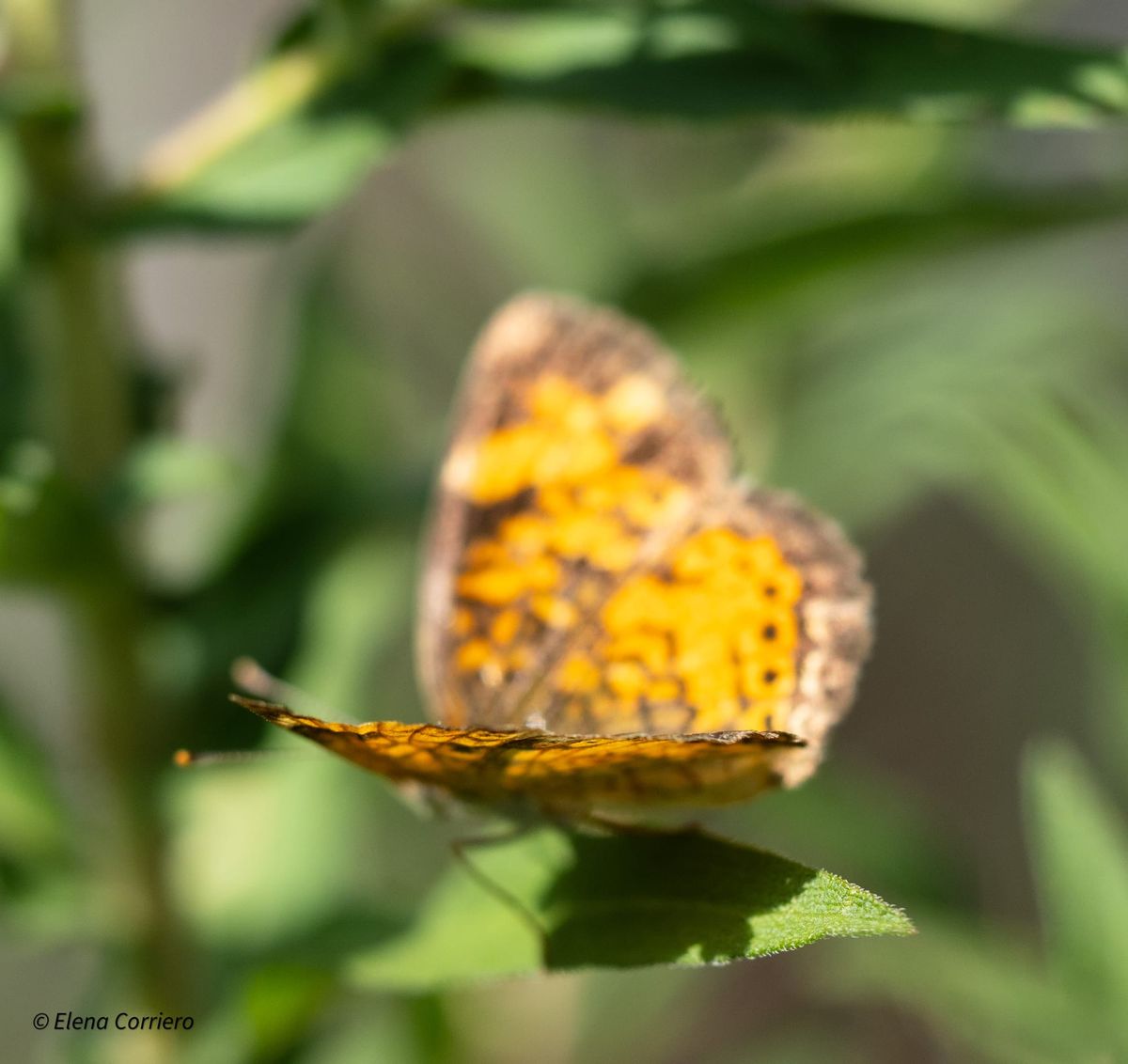
It was mid-August, and the Asters were just starting to bloom.
This tiny Northern Crescent butterfly may have bloomed with them - the New England Aster is the host plant of the caterpillar.
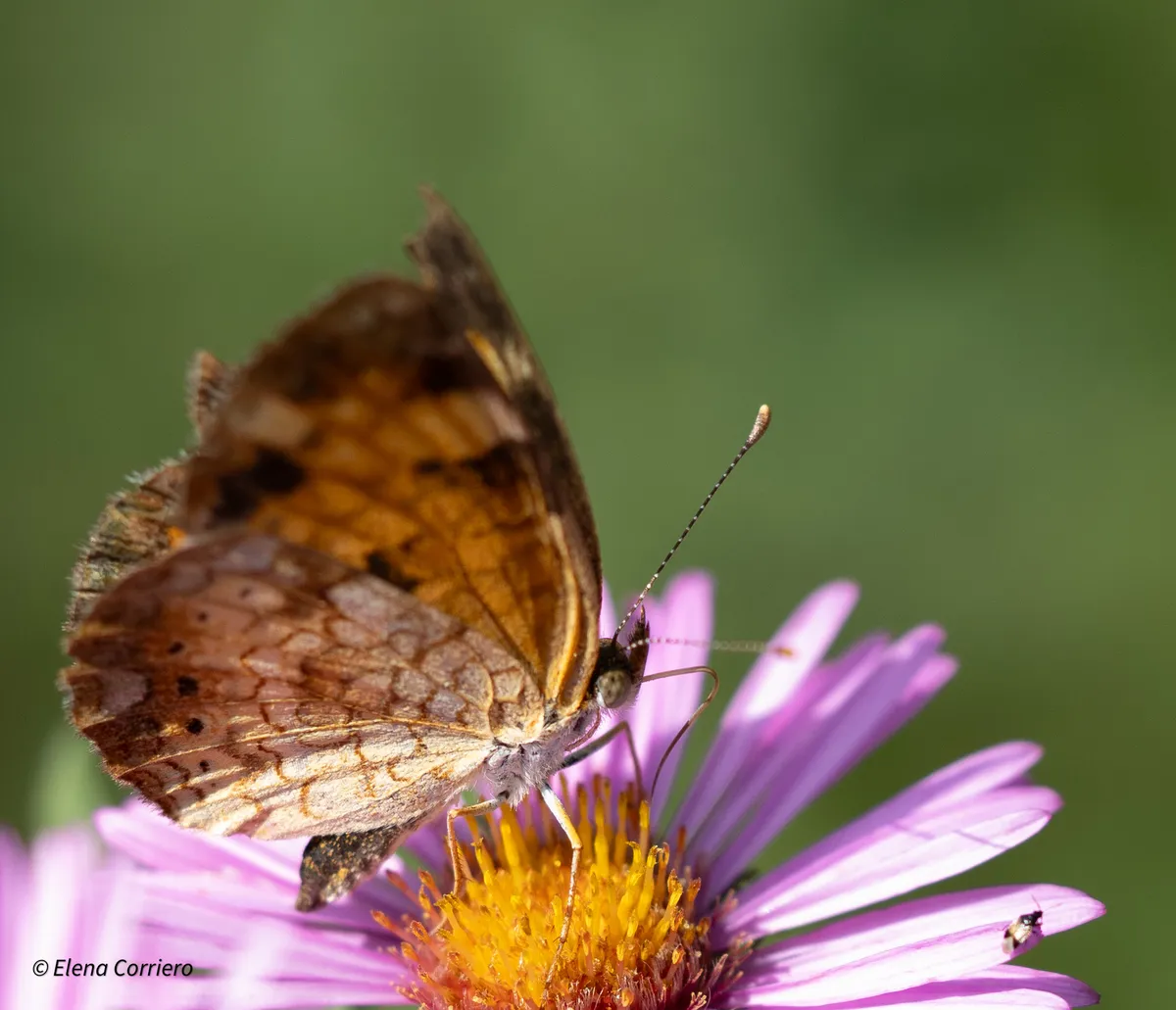
I saw (and photographed) this butterfly two days in a row. On the second day, it seemed less bothered by my presence, and barely moved as I inched closer.
The dark striped, orange-tipped antennae could indicate he's a male... at least by some accounts, and assuming he's a Northern Crescent and not a Pearl Crescent. These are supposedly two distinct varieties, but it seems everybody is really confused about the actual difference, and some say they may be the same butterfly, after all*.
I'm going with Northern, but my only certainty is that he’s a Crescent, because of his orange-brown coat framed by dark brown, and because of the white, moon-like crescents along the edge of the hind wings.
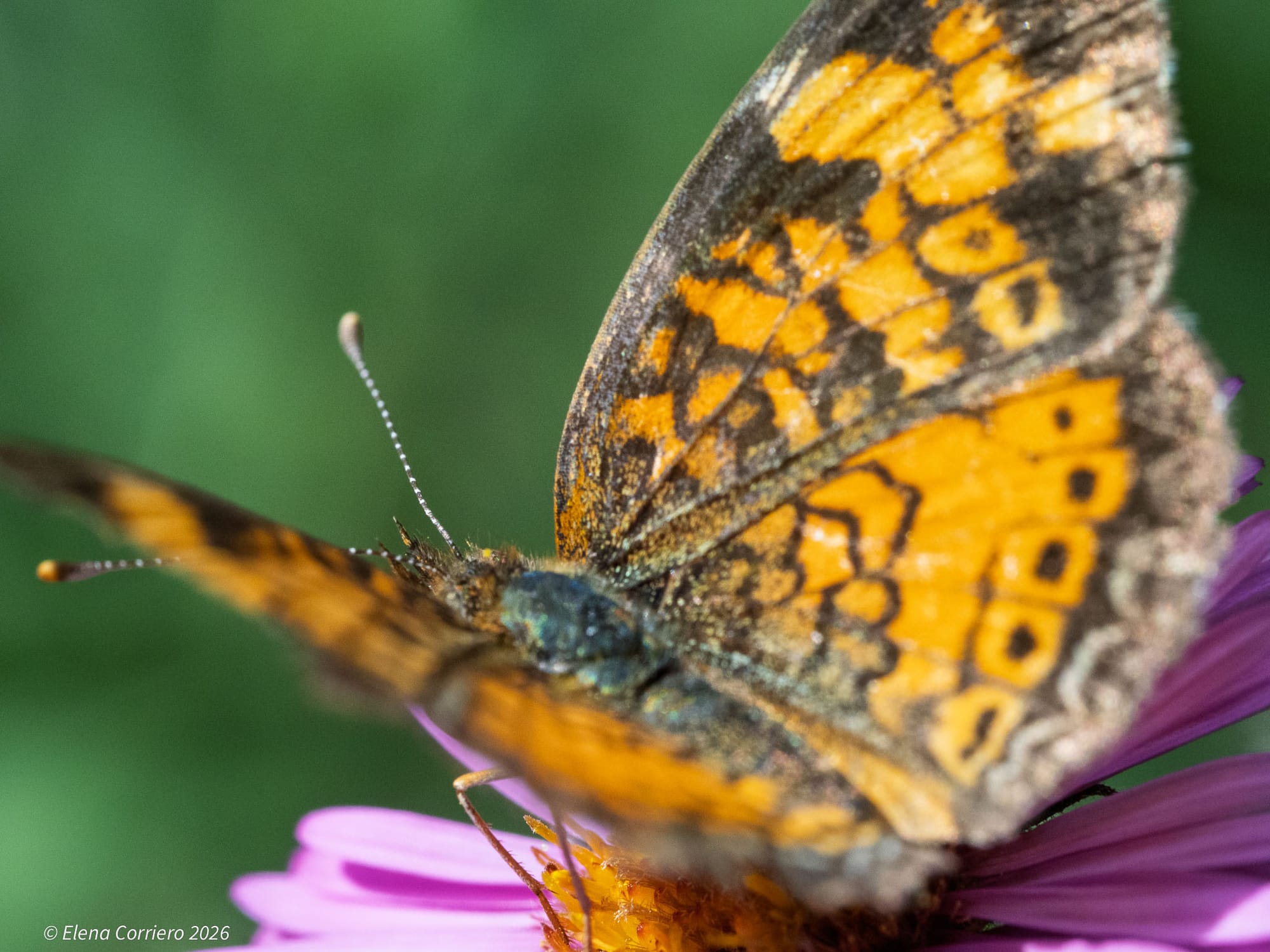
I had never seen a butterfly face to face (so to speak), but when I noticed the black dot in his eyes, always directed at me, I initially thought he was keeping track of my movements, just in case I got too close.
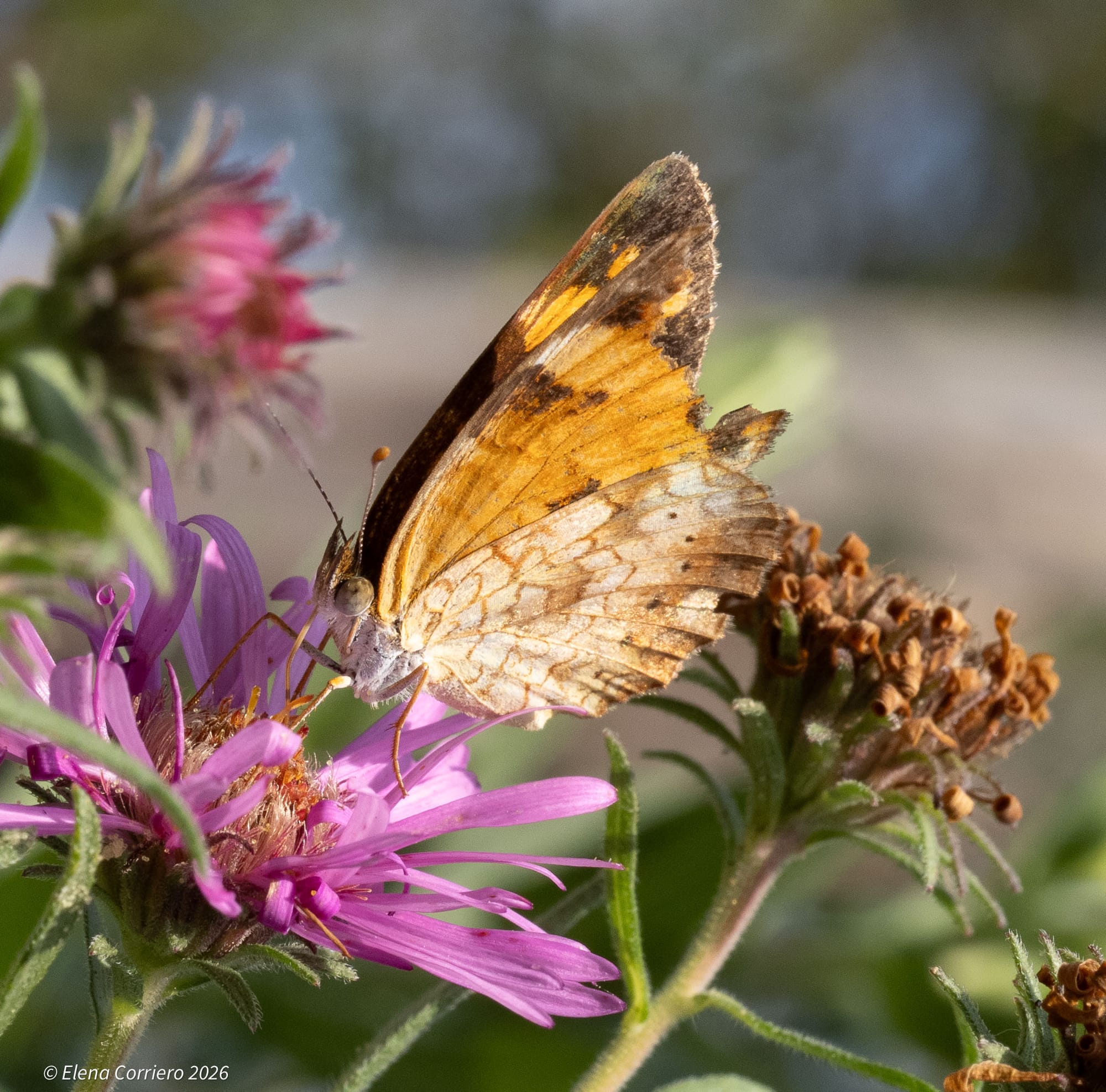
Well, even though the black dot in the Crescent's eyes was always pointed at me, it wasn't really looking at me, because butterfly's vision does not work that way, and the dot that looks like a pupil.... is not a pupil at all!
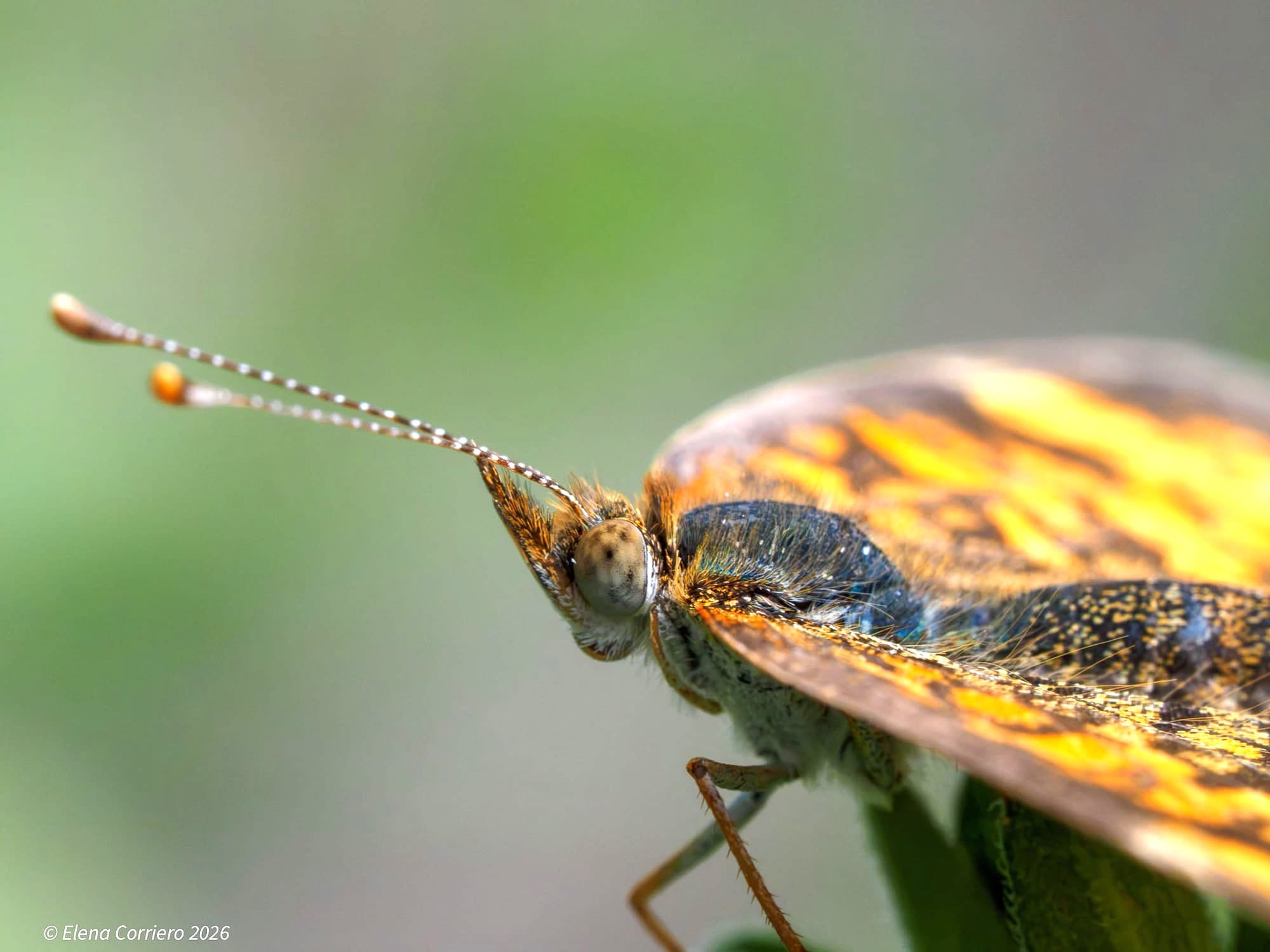
Another cool thing that I noticed for the first time were the appendages sitting between the eyes, to the side of the proboscis. They looked like horns, but I then learnt that - together with the antennae - they allow a butterfly to smell its environment. And they are called... labial palps! (Remember the pedipalps? Similar, but different.)
Sadly, the margin of "my" butterfly's left forewing was damaged, likely due to a collision or to a narrow escape from a predator. I confess that for a second I wondered if they could be repaired... But fortunately, he didn't seem to have problems flying. Apparently, butterflies can fly even with extensive damage, especially if the damage is on the lateral margin, like in my Northern's case (and not on the leading edge or on the hind wings)**.
The Crescent was going to be fine.
(I, by contrast, had to sit down for about an hour, sipping ice water and sugar, after more than 30 minutes standing motionless and hunched over in the blazing August sun.)
Elena Corriero
All photos shot handheld; OM5 mark ii + OM 60mm, Godox V350 & AK diffuser
What struck me is that the authors note that the damage caused by collisions in the mesh cage did not reflect the typical damage occurring in nature (p.4). Now, to me, that sounds a bit cruel. Was it really necessary to generate more damage, and of a type that is not frequently found in natural circumstances? Could it have been enough to observe how flight patterns were affected by existing damage?
I guess the answer depends on your take on the sentience of non-human animals, but here's a statement by the Royal Entomological Society on the use of insects in research.
"The RES acknowledges the growing body of evidence suggesting that insects exhibit complex behaviours and responses to stimuli, which warrants careful consideration of their welfare in scientific contexts. While the extent of their sentience is an ongoing area of study, it is important that we recognise the responsibility researchers have to minimise harm and ensure that their use in research is conducted ethically."

Comments ()